Lunos — on-chain coverage platform
Appointed engineering and product lead after SysLabs acquired a majority stake. Brought in a new team, managed the transition from the old one, unified a fragmented platform that covered $21M in assets before leading a full product pivot toward KYC-native blockchain infrastructure.
Lunos — on-chain coverage platform
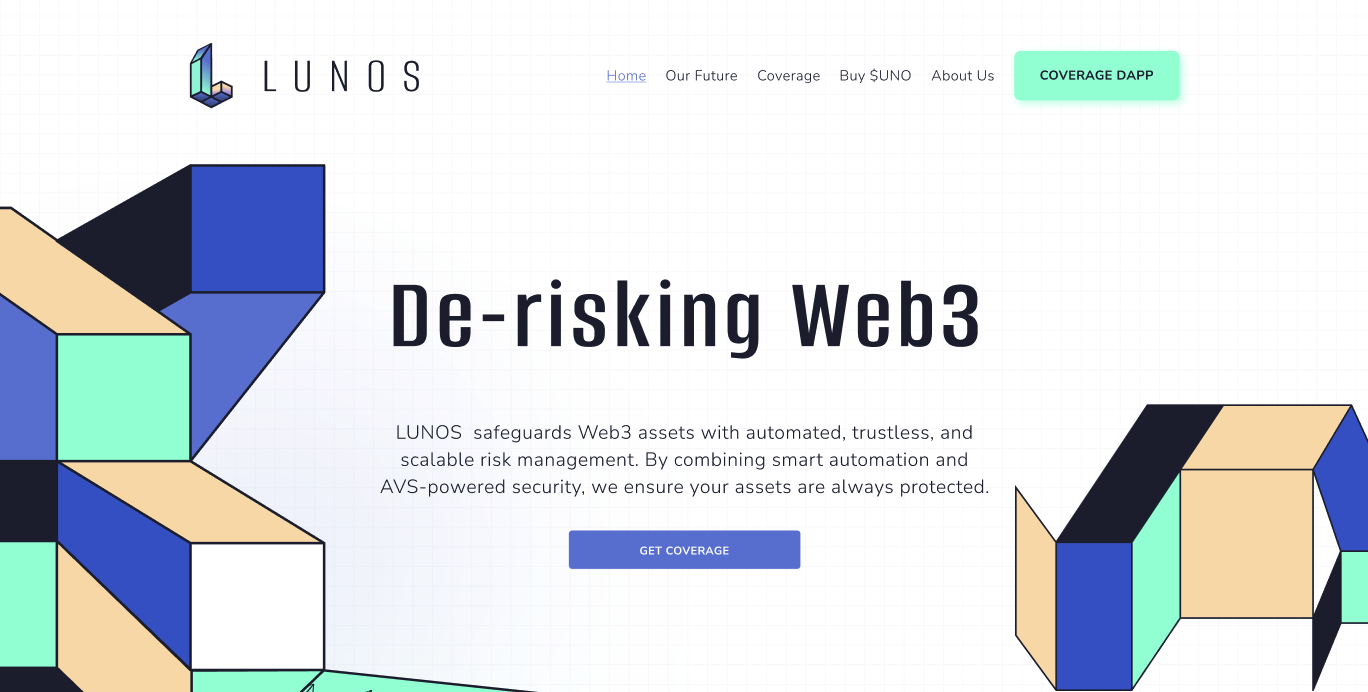
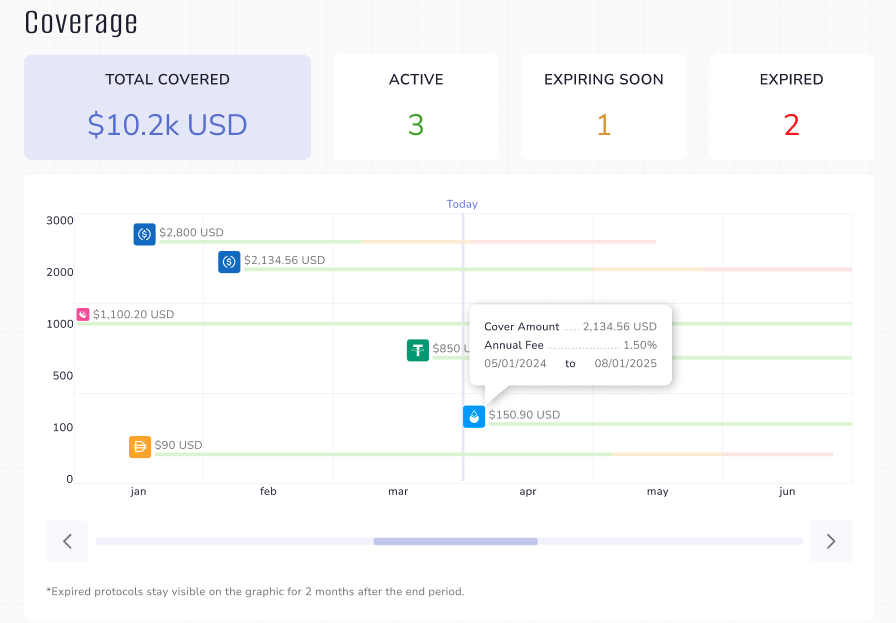
Lunos (formerly UNO Re) was a Web3 insurance platform. Users could buy coverage for other crypto products, protecting on-chain assets against exploits, smart contract failures, and protocol risk. Investment pools provided the coverage capacity; policies were tokenized as NFTs with automated claim processing.
When SysLabs acquired a majority stake, they appointed me as engineering and product lead. I came into a product with a real user base, real coverage in force, and a team mid-transition. My job was to stabilize it, then grow it.
Taking over post-acquisition
Acquisitions are disruptive. The existing team had context the incoming team didn’t, and the incoming team had direction the existing team hadn’t been given. My first priority was managing that transition carefully, not burning institutional knowledge while still making the organizational changes that needed to happen.
I brought in a new team and ran the handover in parallel: structured knowledge transfers, documented workflows, overlapping responsibilities during the ramp-up period. Once the transition was stable, I reorganized the operating model.
The process cleanup was deliberate. Sprints were simplified, operational overhead was reduced, and meetings were trimmed to what actually moved work forward. The goal was to give engineers the space to do good engineering work, not to fill calendars with coordination.
The platform
Lunos was a coverage platform with several interconnected workflows: user onboarding, policy purchase, claims submission, and compliance reporting. These had grown as separate systems with separate owners, which created gaps. Handoffs that failed, data that didn’t flow, support requests that fell through the cracks.
We unified them into a single platform with consistent state management across the full user journey. That sounds simple; it wasn’t. Each workflow had its own edge cases, its own integrations, and its own stakeholders who had opinions about how it should work.
The result was a more reliable product and a team that could reason about the whole system rather than just their corner of it.
The pivot
By 2025, the market had shifted. Although historically we’ve covered over $21M in assets and paid over $700k in claims, crypto insurance had lost momentum, the macro environment was down, user appetite for coverage products had contracted, and the opportunity cost of continuing on the same path was real.
Rather than iterate on a shrinking market, we looked at what Lunos could become with the expertise and network we built over the years: a compliance-capable, KYC-integrated blockchain infrastructure that could serve use cases far beyond retail insurance.
I worked with legal, compliance, and the rest of the leadership team on a new direction: repositioning Lunos as a KYC-native blockchain, built specifically for institutional use cases: banking applications, governance infrastructure, and RWA brokerage. The regulatory and technical groundwork we’d laid for insurance turned out to be exactly what institutional players needed in a blockchain, just applied differently.
The proposal was developed and presented. The pivot was underway when my engagement concluded.
What I learned
Post-acquisition leadership is its own discipline. You’re managing inherited context, incoming direction, and the morale of a team that’s been through significant change all at once. Speed matters, but so does care. Moving too fast through the transition burns the knowledge you need to make good decisions.
Web3 products live and die by market cycles in a way that most software doesn’t. A good product in a down cycle is still a struggling product. I don’t see the pivot as a failure of execution. At the time, it was a correct reading of the environment. Knowing when to change direction is as important as knowing how to execute.