Luxy — a digital asset marketplace
Brought in as technical and product lead to a struggling NFT marketplace. Restructured the team, slashed cloud costs by 45%, reduced endpoint response times by up to 180×, shipped the features that drove traction, and left when SysLabs acquired the company.
Luxy — a digital asset marketplace, acquired
Luxy was an NFT marketplace built on ERC-721 and ERC-1155 with ambitions to compete in the digital collectibles market. When I joined via Pollum, the platform was technically functional but operationally broken: a microservice architecture that had grown without oversight, cloud bills no one could explain, and a team that had never been given clear structure to work within.
My mandate was to fix it. All of it.
The starting state
The first thing I did was listen. To the team, to users, and to the codebase.
The engineering team was capable but scattered. No consistent sprint ceremonies, no design feedback loops, no sync between frontend and backend. Decisions were made ad-hoc, priorities shifted without notice, and no one had a clear picture of what was shipping or when. The cloud bill was a symptom of the same dysfunction: Lambda functions that should have been consolidated, EC2 instances running idle, MongoDB queries that hadn’t been profiled, more environments that the team needed, and none of them properly documented.
On the product side, there was no structured user research. The team had assumptions about what NFT collectors wanted, but those assumptions hadn’t been tested.
Building the operating system
Before touching a line of infrastructure or shipping a feature, I introduced the operating cadence the team had been missing:
- Weekly 1:1s with every team member — tracking blockers, growth, morale
- Sprint planning and reviews with clear definition of done and live demos
- Design feedback cycles to close the loop between product intent and implementation
- Front/backend syncs to catch integration mismatches before they became bugs
- Short dailies — 15 minutes, no status theatre, just blockers and dependencies
Within a few sprints, the change was visible. Engineers knew what they were working on and why. Handoffs stopped failing. Delivery became predictable.
Parallel to that, I ran user interviews and went deep on the NFT space. The culture, the tooling, the economics, the competitors. I needed to understand the market Luxy was operating in before making product bets.
Infrastructure: finding the waste
Once the team had rhythm, I turned to the cloud architecture. The stack was Lambda + EC2 on AWS, MongoDB for persistence, WebSocket services for real-time data (price monitor, notifications, blockchain watcher).
The problems weren’t hard to find, they just required someone to look:
- Over-provisioned Lambda functions with duplicate logic that should have been consolidated
- EC2 instances left running for services that had been deprioritized months earlier
- MongoDB queries on unindexed fields under production load
- No caching on endpoints that were hammered repeatedly with identical requests
- Unused environments consuming resources across ther board
- High-resolution images on responses where none were needed
After profiling and restructuring, we got a 45% reduction on the monthly AWS bill, and certain endpoints went from seconds to milliseconds, a 180× improvement in response time on the worst offenders.
Features that moved the needle
Once the platform was stable and the team was shipping reliably, we focused on what would actually grow the business.
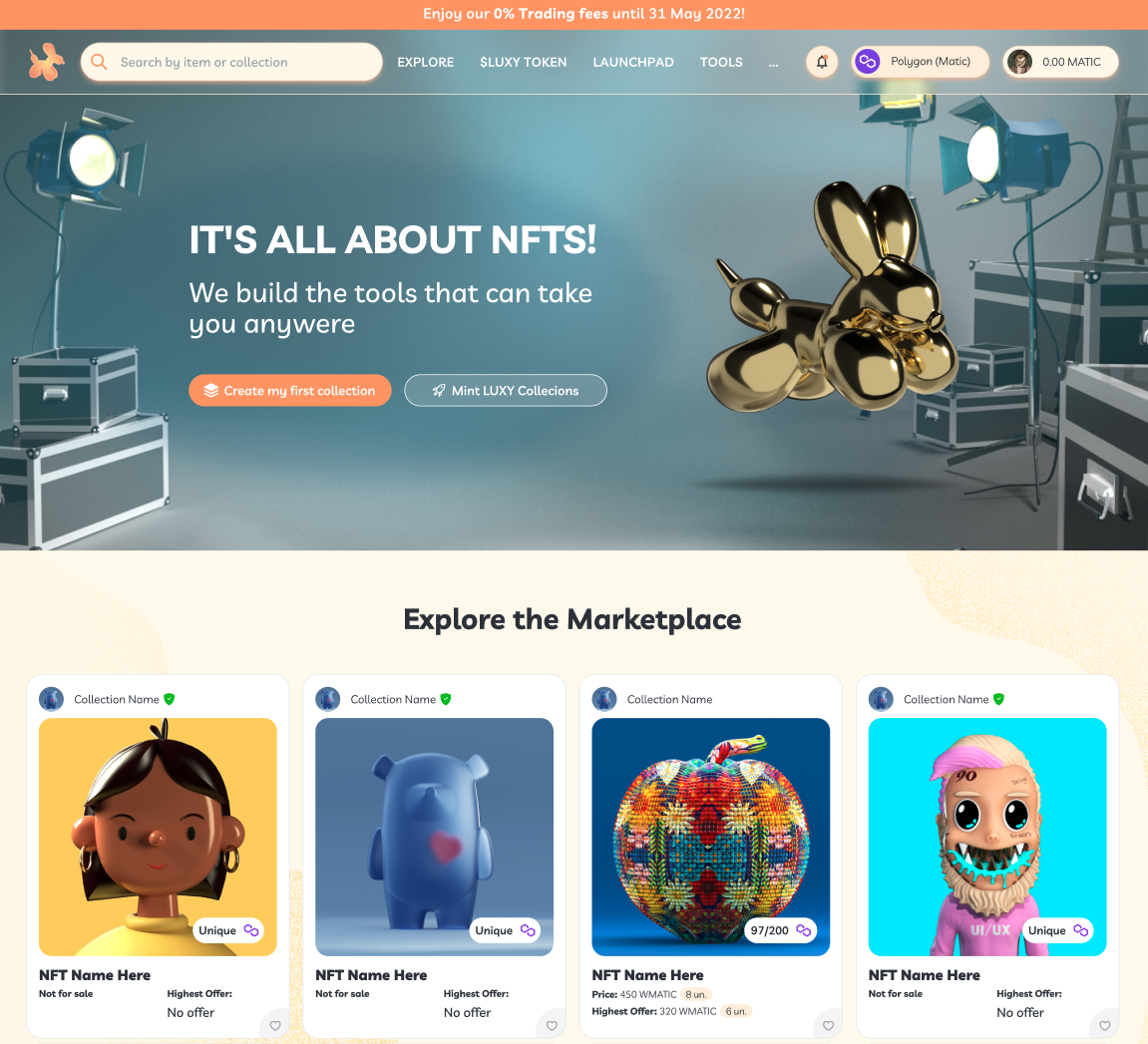
The launchpad was the biggest bet. NFT launchpads, platforms that let creators mint and sell collections directly to collectors without writing a line of code, were generating real volume at the time. We designed and shipped Luxy’s launchpad from scratch: smart contract integration, minting UI, collection configuration, and the sale mechanics. It got traction.
Beyond the launchpad:
- A novel on-chain royalty engine, giving creators a more reliable royalty enforcement mechanism than what the standard marketplaces were offering
- Payment gateway integrations, expanding how buyers could transact
- Monitoring dashboards for transaction volume, platform health, and performance, giving the team visibility they’d never had before
Acquisition
The improvements added up. By the time SysLabs came in with an acquisition offer in 2023, Luxy was a different product than the one I’d joined: stable infrastructure, a team that operated with discipline, and features that had real usage.
I left when the acquisition closed. The outcome validated what I’d always believed: a well-run team with a clear product direction can turn a struggling asset into something worth buying.
What I learned
Technical debt is a people problem first. The Lambda waste, the unindexed queries, the idle EC2, none of that happened because the engineers didn’t know better. It happened because no one had the organizational structure to catch and prioritize it. Fix the team first, then the code.
NFT markets move fast and the window for differentiation is narrow. The launchpad feature worked because we shipped it when the market was still forming. Six months later, the window would have been tighter. Speed of execution, which comes from a well-structured team, is a competitive advantage in its own right.
And acquisitions are built in the day-to-day: reliable delivery, legible architecture, a team that can explain its own decisions. None of that is glamorous. All of it matters.